


Clinical intelligence for community pharmacy

Every script checked beforeit reaches your bench.

Your pharmacist signs every script.

Supported by

Google Cloud NVIDIA Inception

Every check is saved as you work.

Use it end to end, or only for the part you need. The same checks run from the script arriving to the books being done.

Start with the console, and add the patient app when patients ask for it.

Both run on the same clinical checks, with no new hardware or capital.

Console

The pharmacy operating system.

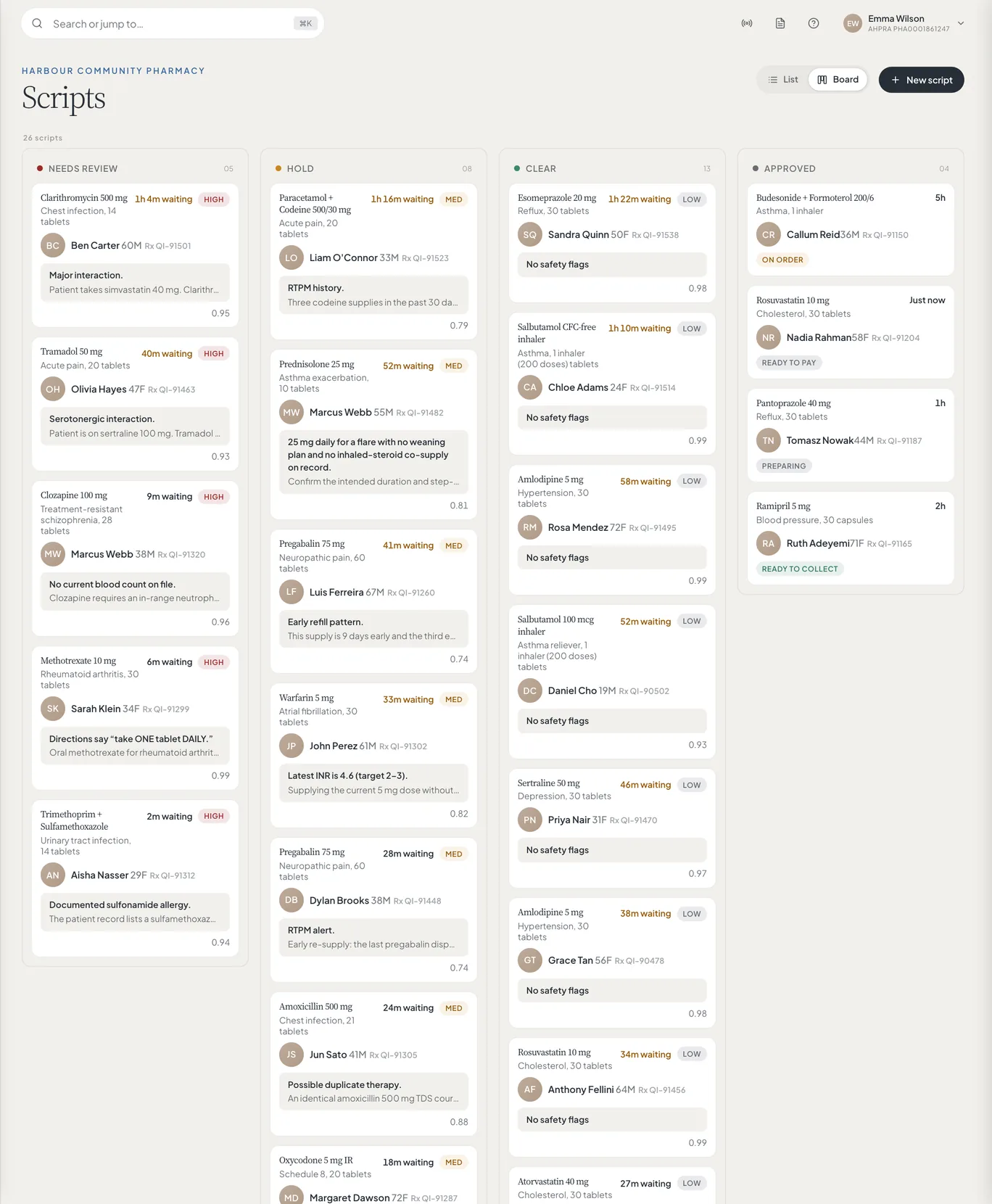
Deploys inside the pharmacy you already run, on your existing licence with no hardware. Every script screened and traced, your pharmacist approves.

  • No capital commitment
  • Existing premises licence
  • Pharmacist on site
  • Deploy in weeks
Patient app

The pharmacy in their pocket.

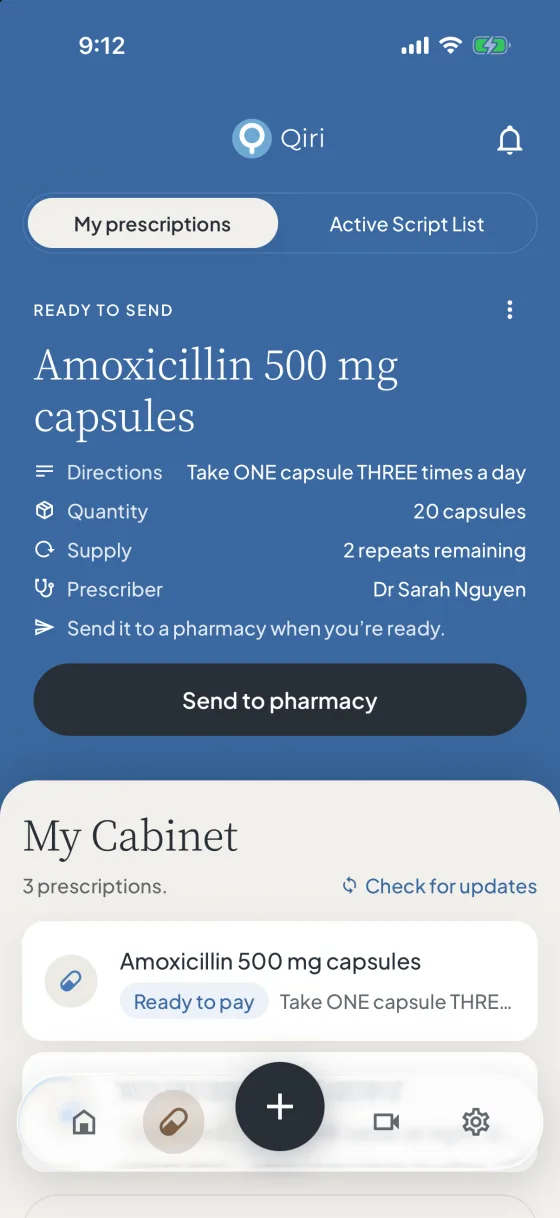
Patients send scripts ahead from home. Each lands in your queue screened, and they hear back the moment you decide.

  • Scripts land in your queue
  • Pay from the phone
  • Consult bookings
  • Partner pharmacies now

Start with the console, add the counter, switch on the app when it suits. See the patient app and dispensing and checkout in depth.

Pharmacists are stretched, and the alert software isn't helping.

$2.1B

a year in medicine-related harm in Australia, from around 650,000 hospital and emergency visits. Around half could be avoided.

9 in 10

drug interaction alerts overridden in clinical decision support, mostly by prescribers.

1 in 2

pharmacists report burnout.

7M+

Australians live outside major cities. Many sit outside your trading hours.

Sources: Felisberto 2024, Dee 2023, PSA 2026, ABS 2024. Full citations & methodology →   How we compare →

What changes for the owner.

01

Pharmacists back on clinical work

Free your pharmacists from routine verification, rejected scripts, and queue pressure. Give them back the hours they were hired for.

02

The queue fills after hours.

Patients send scripts, pay and book consults from the app at any hour. Each lands screened in your queue, ready for your pharmacist when the doors open.

03

Risk reduction you can audit

Every decision leaves a reasoning trail a court or regulator can follow. Hard safety rules on dose ceilings and contraindications cannot be overridden by the model.

100%

of decisions carry a full reasoning trace

Inputs, sources cited, rules fired and the pharmacist's action, on every script.

2–3 hrs
of pharmacist time back on the bench, every day, modelled at about 200 PBS scripts a day.
$75–90K
modelled annual value per site, from recovered wage value plus funded services you can now offer
45–60 sec
recovered per script is the only time assumption the model makes

Methodology: 45–60 sec recovered per script, a modelled 200 PBS scripts/day, Fair Work award loaded rates. Figures in AUD, measured in live pilots now. Full methodology & assumptions →

Where Qiri goes from here.

Each stage runs on the same engine, so nothing you start with is thrown away.

01
Available now

Prove it in your pharmacy.

Software inside your existing store: the console screens every script, the counter takes the payment, and the patient app feeds your queue. No capital commitment, and your premises registration is unchanged.

02
Phase 2

Extend to a kiosk.

The same engine in a standalone dispensing unit, overseen remotely by a pharmacist, is on the roadmap and not available today.

03
Phase 3

Later, what Qiri learns at one pharmacy will help the next.

Every decision trace will feed the reasoning graph, so the more scripts Qiri sees across your network, the better its checks will become with each site you add.

Qiri

See a script go from screening to sign-off.

Thirty minutes with our clinical and operations team. Walk through the console, the dispensing and checkout layer, and the patient app, and how it all fits your existing dispensing system.